Build a Simple Raised Garden Bed in an Afternoon
June 25, 2026
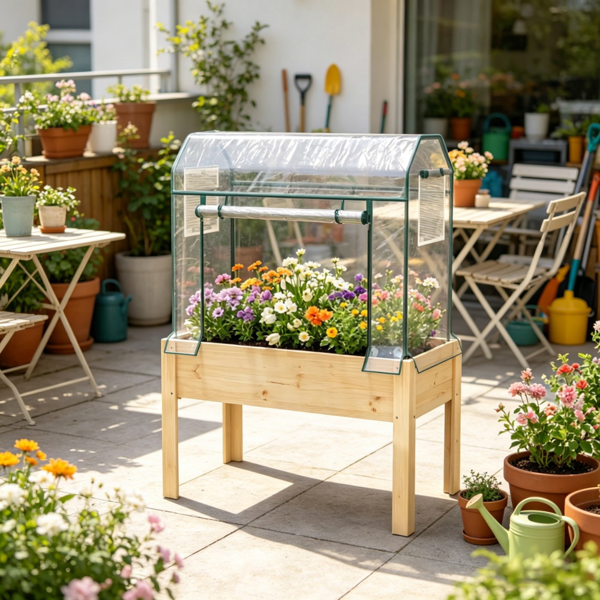
A raised bed makes gardening easier on your back, gives you control over your soil, and keeps your vegetables out of compacted or rocky ground. This is a great first build. The cuts are simple, the joinery is just screws, and one person can finish it in an afternoon. We're building a classic 4 foot by 8 foot bed at about 11 inches tall, a good size for tomatoes, peppers, greens, and herbs.
Materials
- Four boards, 2x6 by 8 feet, for the long sides (two per side, stacked)
- Two boards, 2x6 by 8 feet, cut down for the short ends and corner posts
- One box of 3-inch exterior wood screws (deck or construction screws)
- Optional: landscape fabric or cardboard for the bottom
- Soil to fill, roughly 16 to 18 cubic feet, a mix of topsoil and compost
For wood, cedar lasts longest and resists rot without any treatment, which makes it the safe pick around food. Untreated pine or fir costs less and works fine, but expect it to last fewer years before it needs replacing. If you use treated lumber, choose a type rated safe for ground contact and garden use.
Tools
- Cordless drill or impact driver
- A drill bit for pilot holes, plus a driver bit for your screws
- Circular saw or hand saw (the lumberyard can also cut to length for you)
- Tape measure
- Speed square or any square, for marking straight cuts
- A level
Cut list
From your boards, you'll cut:
- Long sides: 4 pieces at 96 inches (the full 8-foot boards, usually no cut needed)
- Short ends: 4 pieces at 45 inches (so the finished bed comes out to 48 inches wide once the side boards cap the ends)
- Corner posts: 4 pieces at 11 inches, cut from a leftover 2x6 ripped or used as-is for inside corners
The exact end length depends on whether your ends sit inside or outside the long boards. Building the ends to sit inside the long sides, as here, keeps the math simple and the corners strong.
Steps
1. Pick and prep the spot
Choose a level area that gets at least six hours of sun a day for most vegetables. Clear the grass and weeds where the bed will sit. You don't have to dig down, but knocking off the high spots so the frame sits flat saves you a fight later.
2. Build the corner posts into one end
Stand two long boards on edge, stacked, and butt a short end board against them to form a corner. Set an 11-inch post block on the inside of the corner so it spans both stacked boards. Drill pilot holes and drive screws through the side boards into the post, two screws per board. Pilot holes matter here, since screwing near the end of a board without one tends to split the wood.
3. Frame the box
Repeat at each corner, attaching the short ends to the long sides with a post block bridging them. Work on a flat surface so everything stays square. When all four corners are joined, you'll have a rectangle two boards tall. Check that the corners sit at right angles with your square as you go.
4. Square and level it in place
Move the frame to its spot. Measure both diagonals, corner to corner; when the two measurements match, the box is square. Set your level across the top edges and add or remove a little soil under the low corners until it sits flat. A bed that starts level holds water evenly and just looks right.
5. Line the bottom (optional)
Lay cardboard or landscape fabric across the ground inside the frame to smother grass and slow weeds from creeping up. Cardboard breaks down over a season and lets roots reach the soil below, which is fine for most vegetables.
6. Fill with soil
Fill the bed with a blend of quality topsoil and compost, roughly half and half. Mound it slightly, since fresh soil settles over the first few weeks of watering. Water it down, let it settle, and top off any low spots before planting.
Tips that save you grief
- Pilot every screw near a board end. It's the difference between tight corners and split, wobbly ones.
- Keep the bed 4 feet wide or less. You can reach the middle from either side without stepping into the soil and packing it down.
- Buy soil by volume, not by bag, for a build this size. Bagged soil adds up fast; a small load of bulk garden mix from a landscape supplier usually costs less.
- Leave the wood unsealed if it's cedar. It weathers to a soft gray and keeps doing its job for years.
That's the whole build. Once it's filled and planted, the only tools you'll need are a trowel and a watering can. A bed like this lasts for years and makes the gardening part a lot more pleasant than fighting your native dirt.
Helpful resources
- Old Farmer's Almanac: how to build a raised garden bed
- Old Farmer's Almanac: choosing the best soil for raised beds
- University of Minnesota Extension: raised bed gardens