Warm White vs Cool White: Which Bulb Goes Where
July 23, 2026
Every bulb box carries a number in Kelvin, and that number decides more about how a room feels than the fixture, the paint, or the furniture. Get it right and the room does what you meant it to. Get it wrong and a cozy bedroom lights up like a break room. The scale takes a minute to learn, and after that no bulb purchase is a gamble again.

The Kelvin Scale in One Minute
Lower numbers are warmer and more orange, higher numbers are cooler and more blue. The anchors worth memorizing: candlelight sits around 1800K, the classic incandescent bulb at 2700K, bright neutral white at 4000K, and overcast daylight at 6000K and beyond. Warm white on a label almost always means 2700K to 3000K. Cool white and daylight mean 4000K and up. When a listing skips the marketing names, the number tells the truth.
2700K to 3000K: Where You Live
Living room, bedroom, dining room, and hallways in the evening all want warm white. Skin looks healthy under it, wood furniture glows instead of flattening, and the body reads it as evening, which matters for winding down. This is the temperature to standardize on for every pendant, wall lamp, and table lamp in the relaxing parts of the house. Height and placement for those fixtures have their own guides: pendants here and wall lights here.
3500K to 4000K: Where You Work
Neutral white earns its place over work surfaces. Kitchen counters, the bathroom mirror, the laundry corner, the desk, and the garage bench all read sharper under 4000K: colors stay true, small print stays legible, and the light feels awake without being cold. The trick is containment. Neutral light belongs on the task zone, while the room around it can stay warm, which is why under-cabinet strips and mirror lights are often a different temperature from the ceiling fixture two feet away, and it works.
5000K and Up: Almost Never Indoors
Daylight bulbs have two legitimate homes: security lighting outside and a workshop where color matching matters. In a living space they read as clinical, flatten every warm material in the room, and at night they tell your brain the sun is up, the exact problem covered in our night lighting guide. If a room in your house feels vaguely unwelcoming and you cannot say why, check the bulbs; the culprit is usually a 6500K daylight bulb someone bought because the box said bright.
One Sightline, One Temperature
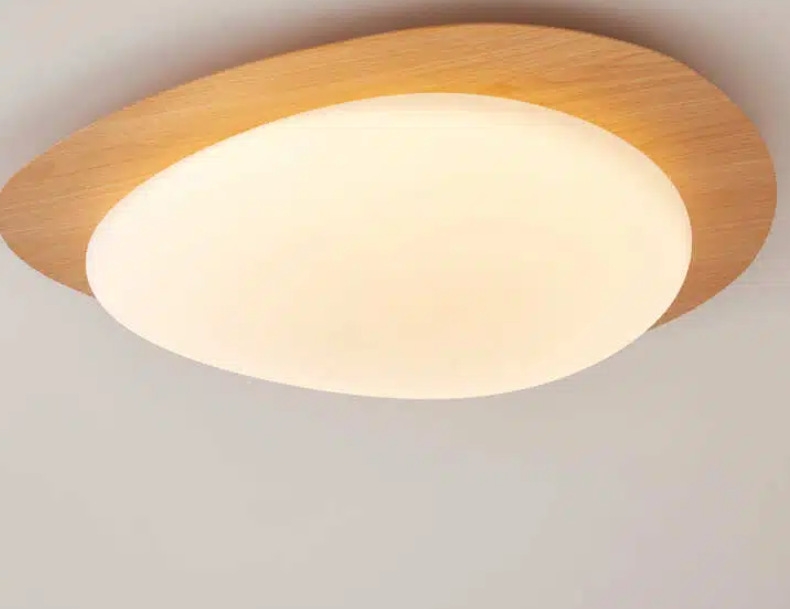
Mixing temperatures in view of each other is the most common lighting mistake in ordinary houses. A 2700K floor lamp beside a 5000K ceiling light makes both look wrong, one dingy orange and the other harsh blue. The rule: every bulb you can see from one seat should match. Buy bulbs in multipacks of the same Kelvin, replace them in room-sized batches instead of one at a time, and when a fixture has an integrated LED, check its listed temperature before buying so it matches the room it joins. Most fixtures in the ceiling light collection state it right on the listing, and several are switchable between temperatures.
Lumens Are the Other Number
Kelvin sets the color, lumens set the brightness, and the two are independent: a bulb can be warm and very bright, or cool and dim. Rough targets: 400 to 500 lumens replaces the old 40-watt bulb, around 800 replaces a 60, and 1600 replaces a 100. A common fix for a gloomy room is keeping the warm 2700K color and stepping the lumens up a size, which adds light without changing the room's character.
Dimmers, Dim-to-Warm, and Tunable Bulbs
A standard LED holds its color as it dims, so a dimmed 4000K bulb is a dim cold light, still cold. Dim-to-warm LEDs slide toward candlelight as they go down, the way old incandescents did, and they are worth seeking out for dining and living rooms. Smart tunable bulbs cover the whole range in one lamp, neutral at the desk by day and warm at night, which suits a room that has to be an office until five and a lounge after. And the small stuff follows the same rule: string lights and night lights already skew warm, so they blend into a 2700K house without a second thought.
The Cheat Sheet
- Bedroom, living, dining: 2700K
- Hallways: 2700K to 3000K
- Kitchen ceiling: 3000K, with 4000K on the counter task lights
- Bathroom mirror: 3500K to 4000K, warm elsewhere in the room
- Desk and laundry: 4000K
- Workshop and security: 5000K
Standardize, buy in batches, and the whole house starts agreeing with itself after dark.