Storage Ottoman Ideas for Living Rooms
July 7, 2026
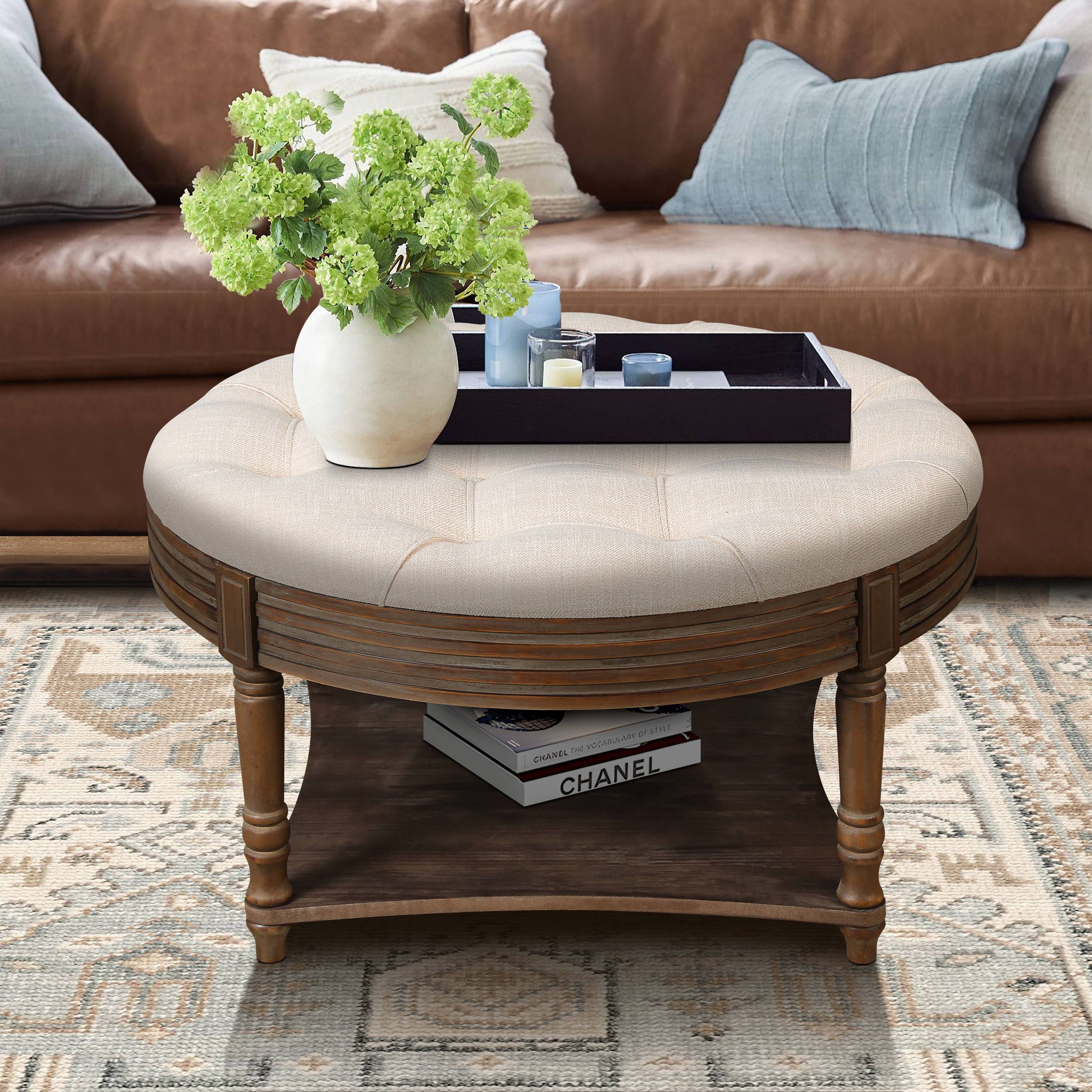
A storage ottoman is the piece of furniture that earns its floor space twice. On the surface it is a footrest, a coffee table, or a spare seat. Inside it swallows the blankets, remotes, board games, and toys that otherwise pile up on every flat surface in the room. If your living room always looks slightly fuller than you want it to, an ottoman with a hollow middle is usually the cheapest fix available.
Use One as a Soft Coffee Table
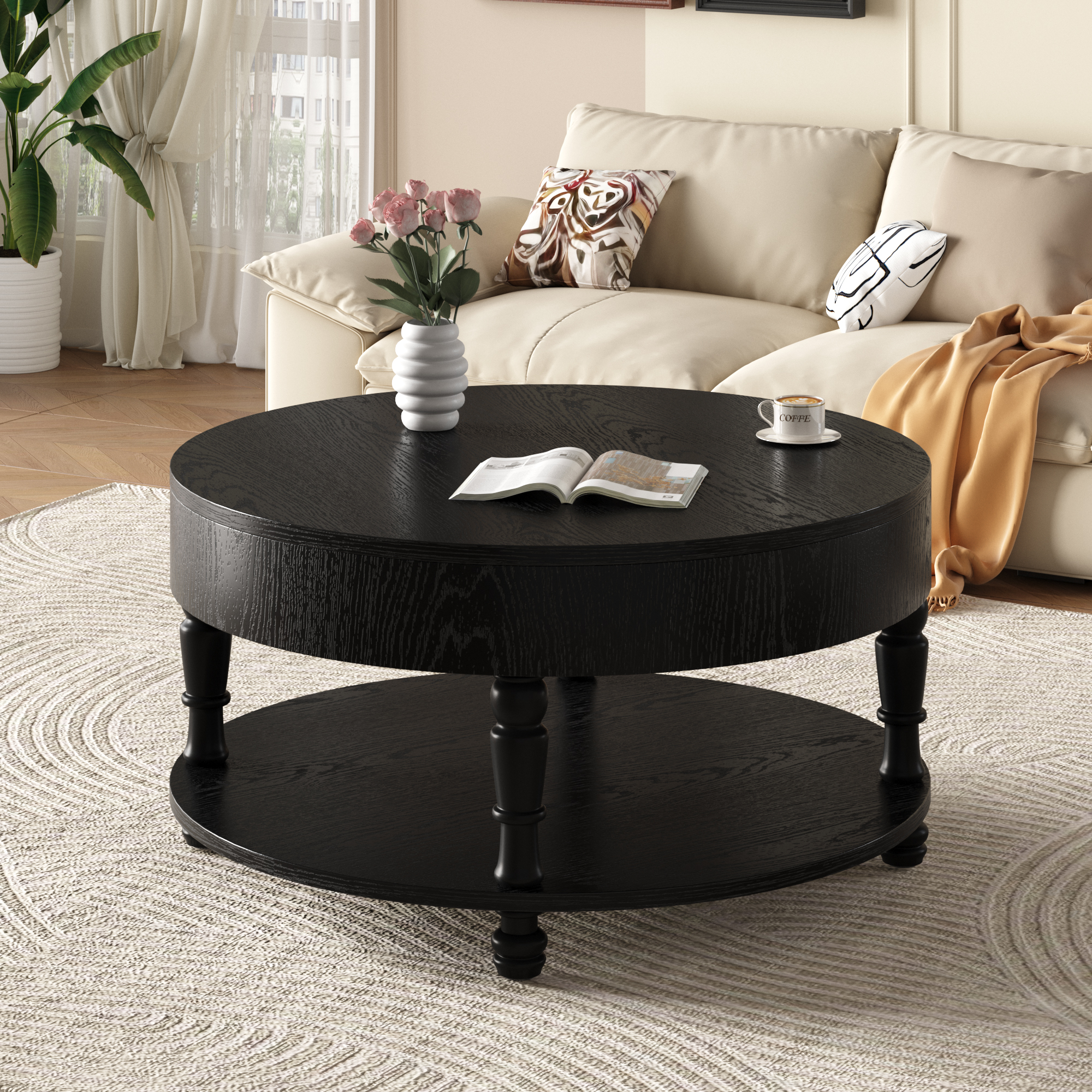
The most popular way to run a storage ottoman is dead center in front of the sofa, doing coffee table duty. A round tufted ottoman table gives you a padded surface for feet, a shelf or hollow for storage, and a softer look than wood or glass. Add a firm tray on top and you get a stable spot for drinks, so you lose nothing to a hard-top table.
Sizing works the same as any coffee table. Keep the height within an inch or two of the sofa cushions and leave 14 to 18 inches of walking clearance around it. In a small room, round beats rectangular because there are no corners to catch a shin on.
Hide the Blanket Pile
Throw blankets are the classic ottoman filler because they compress, they live in the living room anyway, and they come in and out daily during the cold months. One medium ottoman holds four to six throws. Fold them flat rather than stuffing them in, and the lid closes properly instead of sitting proud.
Tame the Toy Situation
If kids share your living room, an ottoman is the fastest cleanup system there is. Toys go in, lid goes down, room looks like adults live in it. Pick one with a hinged lid or a fully removable top that small hands can manage, and check for a slow-close hinge or a lid support so it cannot slam on fingers.
Extra Seating That Stores Itself
Two small cube ottomans tucked under a console or beside a bookcase give you guest seating that appears when needed and vanishes after. Cubes around 15 to 18 inches square seat an adult for an evening without complaint. Between visits they hold the stuff you want nearby without display: chargers, game controllers, the knitting project.
End-of-Bed and Window Duty
Storage ottomans moonlight outside the living room too. A long bench version at the foot of a bed holds spare bedding and gives you a place to sit while putting on shoes. Under a window, a low ottoman turns dead wall space into a reading perch with storage for the books.
How to Pick a Good One
A few things separate an ottoman you keep for a decade from one that sags in a year.
- Lid style. Hinged lids are easiest for daily use. Removable lids are simpler mechanically and cheaper, and nothing about them breaks.
- Top firmness. A firm, flat top takes a tray and works as a table. A deeply tufted top looks plush and is better kept to footrest duty.
- Frame. Look for a wood frame over cardboard-cored builds. Sit on a corner before you buy if you can. If it creaks in the showroom, it will creak at home.
- Fabric. Linen blends and performance weaves shrug off daily contact. Light suede-look fabric shows every mark.
- Interior volume. Check the interior depth, since a thick padded lid can eat a third of the advertised height.
Where It Beats a Lift-Top Table
A lift-top coffee table solves a similar problem with a harder surface and a pop-up desk. The ottoman wins when comfort and softness matter more than a work surface: households with crawling kids, rooms where feet go up every evening, and small spaces where a padded cube doubles as seating. Plenty of living rooms run one of each, table for the laptop, ottoman for the blankets and the feet.