How High to Hang Curtains
July 2, 2026

The height and width at which you hang curtains affects how tall the ceiling feels, how large the window looks, and whether the room feels finished or cramped. Most people hang rods too low and use panels that are too narrow, both of which shrink the apparent size of the window.
How High Above the Window Frame to Hang the Rod
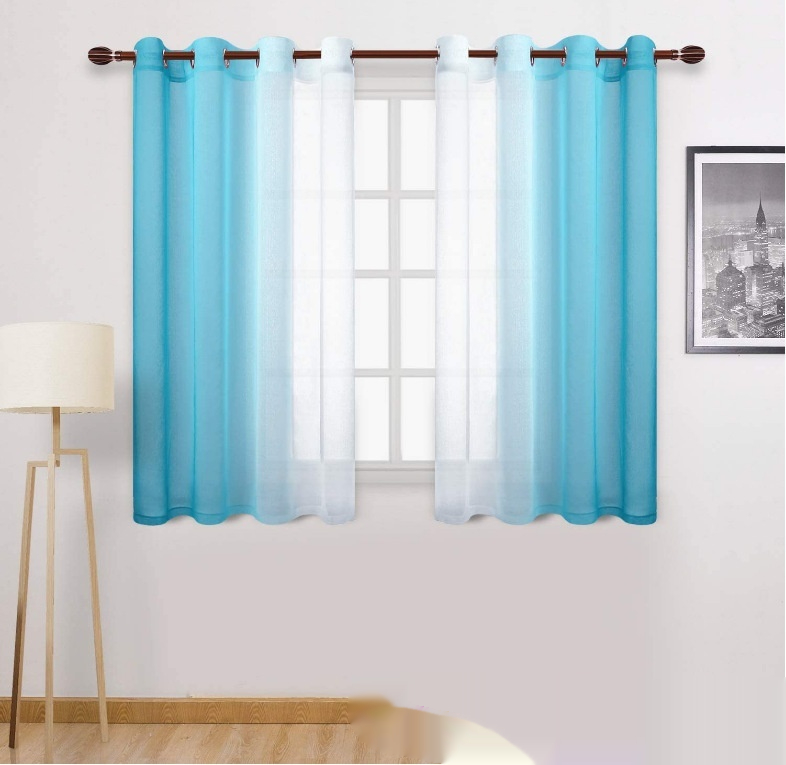
The standard recommendation for most rooms is to mount the rod 4 to 6 inches above the top of the window frame. At this height the curtain covers the frame header when closed and clears it when open, which gives the window a taller, more proportional look.
In rooms with ceilings 9 feet or higher, push that number up. Hanging the rod 8 to 12 inches above the frame, or even closer to the ceiling, draws the eye upward and makes the wall feel taller. This works especially well with floor-length curtains and drapes. If you have crown molding, hang the rod just below it rather than trying to split the difference.
The one rule worth following in any room: if the space between the top of the frame and the ceiling is 12 inches or less, mount the rod as close to the ceiling as your curtain hardware allows. Splitting a short gap with a rod in the middle looks awkward.
How Wide to Extend the Rod Past the Window
Extend the rod 3 to 6 inches past each side of the window frame. This serves two purposes. First, when the panels are open, the fabric stacks outside the glass rather than over it, so you lose less light. Second, the extended rod makes the window look wider.
On very wide windows, you can go up to 8 inches past each side, especially if you want the curtains to frame the window rather than fully retract. On narrow windows, 3 inches per side is usually enough.
Accounting for Curtain Header Types
The rod sits at a specific height, but where the fabric actually starts depends on the header style of the panel. This is where measurement mistakes happen.
- Rod pocket: The fabric starts right at the rod. The heading sits on the rod.
- Tab top: The fabric hangs below the rod by the tab length, usually 2 to 4 inches. The rod itself is fully visible above the fabric.
- Eyelet / grommet: Grommets typically drop the fabric 1 to 1.5 inches below the rod.
- Pinch pleat or pencil pleat with hooks: The hook positions can raise or lower the fabric by 1 to 3 inches depending on where the hook sits in the tape.
Before you mark the wall, hold the panel up and measure from the top of the header to the top of the fabric to account for this drop. Then decide where you want the top of the fabric to fall, and add that drop amount to find where the rod center should be.
Where the Hem Should Land
For most living rooms and bedrooms, the hem should land within half an inch of the floor. This gives a clean, intentional look. Puddle hems, where fabric pools on the floor by 3 to 6 inches, work in formal dining rooms and spaces where the curtains stay closed most of the time, but they collect dust and are a trip hazard in high-traffic areas.
Floating hems, which stop 1 to 2 inches above the floor, work well in kids' rooms and kitchens where you need to sweep under the panels. Anything that stops mid-wall or at windowsill height looks deliberately short and works only for cafe curtains or kitchen tiers.
For rooms where you want blackout or thermal curtains to actually block light, a hem that brushes the floor is better than one that floats. Gap at the bottom lets light and cold air in.
Panel Width: The Other Number People Get Wrong
Each curtain panel needs to be 1.5 to 2.5 times the width of the space it covers when closed. A rod that spans 60 inches needs a total of 90 to 150 inches of fabric across both panels combined, depending on how full you want the drape to look. Buying panels that are exactly the rod width produces flat, sparse-looking curtains that never look intentional.
Most ready-made panels are sold in 42 to 54 inch widths. For a 60-inch rod you want two panels, for a 90-inch rod you may need three or four. If fullness matters and you are using curtains with a pinch pleat header, aim for the higher end of that multiplier, around 2 to 2.5 times the span.
Common Mistakes
Hanging the rod directly at the top of the window frame is the most widespread mistake. It makes windows look short and the ceiling low, regardless of what curtains you use.
The second mistake is buying one panel per window and centering it. A single panel pushed to one side is a deliberate style choice in certain contexts, but one centered panel that tries to cover the full window looks unfinished. Two panels, each the right width, hung from a rod that extends past the frame, will do more for a room than any fabric choice.